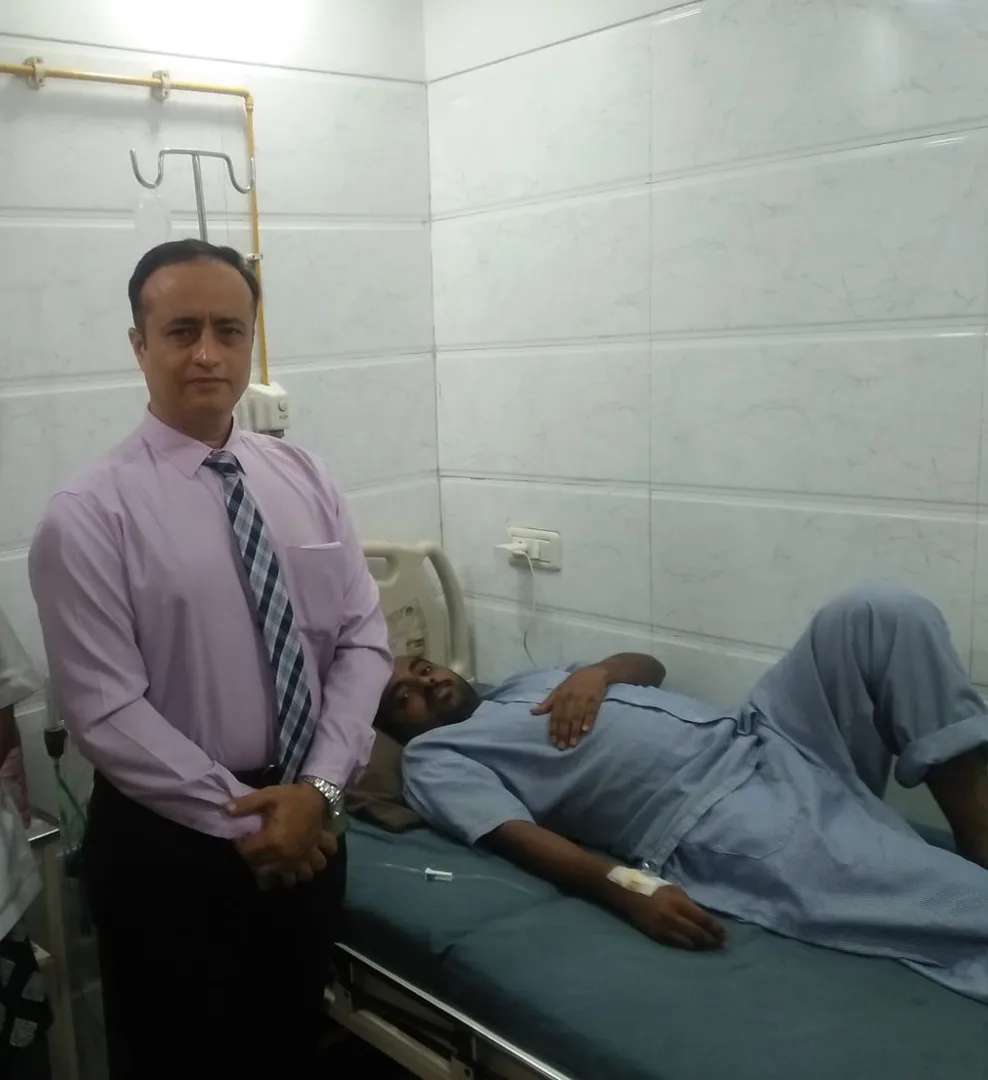
Why Patients Sometimes Seek a Second Opinion Before Surgery: Making an Informed Healthcare Decision
Introduction
Being told that you may need surgery can bring many questions to mind.
Patients may wonder:
Is surgery really necessary?
Are there other treatment options?
Is laparoscopic surgery suitable for me?
How urgent is the procedure?
What will recovery be like?
Should I get another medical opinion?
Seeking a second surgical opinion can be a reasonable step when a patient wants greater clarity about a diagnosis or proposed treatment.
A second opinion does not necessarily mean that the first doctor was wrong. It can simply give the patient another opportunity to understand the condition, discuss alternatives, and feel confident about the treatment plan.
At Aayush Multispecialty Hospital, Thane, patients can consult Dr. Ankur Bhanushali, General Surgeon, for an independent clinical evaluation of appropriate general surgical conditions.
What Is a Second Medical Opinion?
A second opinion means consulting another appropriately qualified doctor after receiving an initial diagnosis or treatment recommendation.
The second doctor reviews the available information and provides their own clinical assessment.
This may:
Confirm the original diagnosis
Suggest additional investigations
Recommend a different treatment
Explain another surgical approach
Help clarify the urgency of treatment
Provide reassurance
The purpose should be better understanding and informed decision-making.
Does Getting a Second Opinion Mean You Don't Trust Your Doctor?
Not necessarily.
Healthcare decisions can be significant, particularly when surgery is being considered.
A patient may simply want to understand the recommendation more clearly before proceeding.
Seeking additional information is different from distrusting a doctor.
When Might a Second Opinion Be Useful?
A second opinion may be particularly useful when:
The Diagnosis Is Unclear
If you have received different explanations for your symptoms, another evaluation may help clarify the situation.
Surgery Is Being Recommended
For a planned procedure, some patients may want to understand why surgery is being advised.
The Surgery Is Complex
Complex procedures may involve multiple considerations and treatment approaches.
You Have Already Had Previous Surgery
Recurrent or previously operated conditions may require careful assessment.
You Are Unsure About the Surgical Approach
You may want to understand whether an open, laparoscopic, laser-based, or other approach is appropriate.
A Second Opinion Does Not Always Mean Another Surgery
The second doctor may agree completely with the first recommendation.
That can actually be reassuring.
For example:
First opinion → Surgery recommended
Second opinion → Surgery also recommended
The patient now has greater confidence that the treatment recommendation is supported by another clinical assessment.
What Should You Take for a Second Opinion?
The more complete the information, the more useful the consultation can be.
Bring:
Previous prescriptions
Blood test reports
Ultrasound reports
CT/MRI reports
Actual imaging where available
Previous operation records
Discharge summaries
Biopsy/pathology reports
Current medication list
Do not rely only on memory.
Why the Actual Scan Can Be Important
A written radiology report provides useful information, but the actual imaging may also be relevant.
Depending on the condition, the surgeon may want to review the images themselves.
Therefore, when possible, bring the original imaging files along with the written report.
What Questions Should You Ask During a Second Opinion?
A second consultation should be used to obtain meaningful information.
Consider asking:
“What do you think is the diagnosis?”
This allows the surgeon to provide an independent assessment.
“Do I definitely need surgery?”
The answer depends on the condition.
“What happens if I don't undergo surgery now?”
This helps you understand the importance of timing.
“Are there non-surgical options?”
Not every condition requires an operation.
“What surgical techniques are available?”
Depending on the condition, there may be different approaches.
Ask About Laparoscopic Surgery When Appropriate
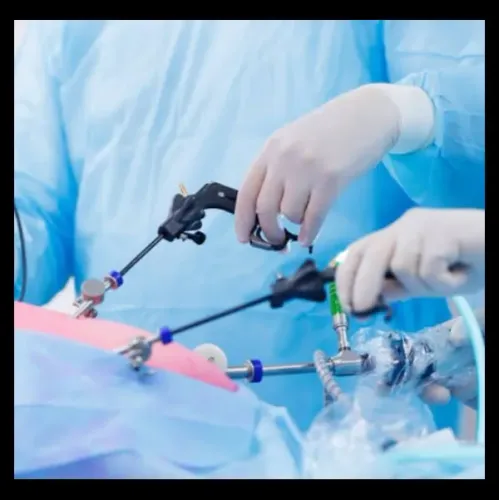
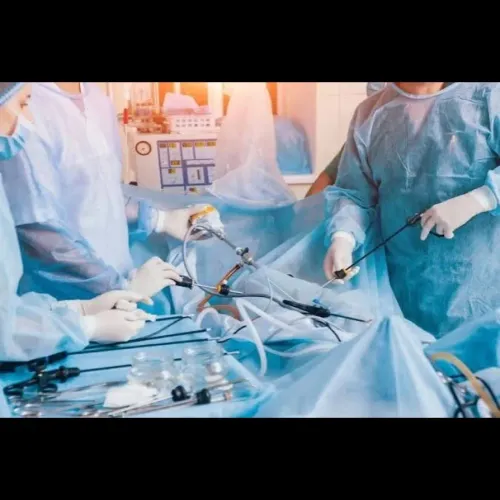
Patients may hear the term advanced laparoscopy and wonder whether it applies to their condition.
Ask the surgeon:
“Would laparoscopic surgery be appropriate in my case?”
Laparoscopic techniques can be beneficial for selected procedures.
However, patient selection is important.
The decision depends on:
Diagnosis
Anatomy
Previous operations
Disease severity
Overall health
Surgical complexity
What About Laser Surgery?
Laser procedures may be appropriate for selected surgical conditions.
However, the presence of a laser facility does not mean that laser treatment should be used for every patient.
A useful question is:
“What benefit would a laser technique provide for my specific condition?”
This encourages a discussion based on your diagnosis rather than marketing terminology.
What If Two Surgeons Recommend Different Procedures?
This can happen.
Different surgical approaches may sometimes be reasonable depending on the patient's condition.
If you receive different recommendations, ask both surgeons to explain:
Why they recommend their approach
Expected benefits
Potential risks
Recovery
Alternatives
What happens if treatment is delayed
Understanding the reasoning is often more important than simply choosing the procedure with the most attractive name.
Don't Compare Procedures Only by the Size of the Incision
Patients often assume:
Smaller incision = automatically better surgery.
But surgical success depends on much more than incision size.
The treatment should address the underlying problem effectively while considering patient safety and recovery.
A minimally invasive approach is valuable when it is appropriate for the specific condition.
How a General Surgeon Evaluates a Surgical Problem
A general surgeon may consider:
Patient History
How symptoms started and changed.
Physical Examination
What the surgeon finds during examination.
Investigations
Blood tests and imaging where required.
Previous Treatment
What has already been tried.
Patient Factors
Age, medical history, medicines, and other relevant considerations.
Surgical Anatomy
The location and extent of the condition.
All these factors contribute to treatment planning.
What If the Second Opinion Says Surgery Is Not Needed?
This can happen.
Depending on the condition, the surgeon may recommend:
Observation
Medication
Lifestyle changes
Follow-up
Further investigation
Another specialist consultation
Patients should follow the medical advice appropriate to their diagnosis.
What If Both Doctors Recommend Surgery?
If two qualified surgeons independently recommend surgery after reviewing your case, you may feel more confident about the need for treatment.
You can then focus on understanding:
Which procedure is being recommended
Why
The expected outcome
Recovery
Risks
Hospitalisation
Follow-up
Second Opinion Before Emergency Surgery
A second opinion is generally more relevant to planned or elective surgery.
If a patient has a potentially serious emergency, delaying necessary treatment simply to seek multiple opinions may be unsafe.
In urgent situations, the treating medical team will assess the condition and recommend appropriate action.
Second Opinion for Complex Surgical Conditions
Patients with recurrent or complex surgical problems may particularly benefit from detailed review.
Examples can include conditions involving:
Previous abdominal operations
Recurrent surgical problems
Complicated infections
Complex abdominal conditions
Multiple previous procedures
The appropriate evaluation depends on the individual case.
The Importance of Patient-Doctor Communication
A second opinion should not become a competition between doctors.
The real objective is:
Better information → Better understanding → Informed decision
Patients should feel comfortable asking questions without feeling pressured.
Dr. Ankur Bhanushali – General Surgeon in Thane
Dr. Ankur Bhanushali, General Surgeon, provides consultation at Aayush Multispecialty Hospital, Thane.
Patients can discuss their existing diagnosis, previous reports, surgical recommendations, and possible treatment approaches during consultation.
Where appropriate, patients can also discuss modern surgical techniques, including minimally invasive approaches.
Aayush Multispecialty Hospital – Advanced Surgical Care in Thane
Aayush Multispecialty Hospital provides general surgical consultation and treatment supported by modern surgical facilities.
The hospital's positioning as a:
Laser & Advanced Laparoscopy Centre in Thane
reflects its focus on modern surgical technologies where clinically appropriate.
The hospital's surgical services cover a broad range of general surgical conditions.
What Makes a Good Surgical Consultation?
A good consultation should help a patient understand:
What is wrong?
Why is it happening?
Does it require treatment?
What treatment options exist?
Why is one option being recommended?
What should I expect during recovery?
Patients should leave the consultation with a clearer understanding of their situation.
Questions to Ask Before Scheduling Surgery
Before confirming a planned procedure, patients can ask:
What is my exact diagnosis?
Why is surgery necessary?
Is there an alternative?
Is the procedure urgent?
What type of surgery is recommended?
Is minimally invasive surgery suitable?
What are the major risks?
How long will recovery take?
How long might I need to stay in hospital?
What follow-up will I require?
Searching for a Surgical Second Opinion in Thane?
People may search online for:
Second opinion surgeon in Thane
Surgical second opinion in Thane
General surgeon for second opinion Thane
General surgeon in Thane West
Laparoscopic surgeon in Thane
Advanced laparoscopy centre in Thane
Surgical consultation in Thane
General surgery hospital in Thane
Patients should bring their complete medical information and discuss their specific condition with a qualified surgeon.
Frequently Asked Questions
Is it okay to get a second opinion before surgery?
Yes. For planned procedures, patients may seek another qualified medical opinion to better understand their diagnosis and options.
Will the second surgeon always recommend something different?
No. The second opinion may confirm the original diagnosis and treatment recommendation.
Should I carry my old reports?
Yes. Previous reports, scans, prescriptions, and operation records can be very helpful.
Can I ask about laparoscopic surgery during a second opinion?
Yes. If surgery is recommended, you can ask whether a laparoscopic approach is suitable.
Is a second opinion appropriate during an emergency?
Emergency treatment should not be unnecessarily delayed. The urgency of the situation should be determined by the treating medical team.
Visit Aayush Multispecialty Hospital, Thane
Laser & Advanced Laparoscopy Centre
Aayush Multispecialty Hospital
Address:
1st Floor, Marigold Apartment
Almeda Road, Mahapalika Bhavan Road
Opposite Nitin Co. & Honda Showroom
Panch Pakhdi, Thane West
Thane, Maharashtra – 400602
Phone: 086910 33033
Open 24 Hours
Conclusion
Choosing to seek a second opinion before planned surgery can be a practical way to gain greater clarity about your diagnosis and treatment options.
It does not mean that the first surgeon was necessarily incorrect. In many cases, the second consultation confirms the original recommendation and gives the patient additional confidence.
At Aayush Multispecialty Hospital, Thane, Dr. Ankur Bhanushali, General Surgeon, provides surgical consultations for patients seeking evaluation and treatment planning for general surgical conditions.
With its focus on Laser & Advanced Laparoscopy, Aayush Multispecialty Hospital provides modern surgical options when they are clinically appropriate.
Patients considering surgery can bring their previous reports, discuss their concerns openly, and ask questions about the diagnosis, alternatives, surgical technique, recovery, and follow-up.
Aayush Multispecialty Hospital
1st Floor, Marigold Apartment, Almeda Road, Mahapalika Bhavan Road, opposite Nitin Co. & Honda Showroom, Panch Pakhdi, Thane West, Thane, Maharashtra – 400602.
Phone: 086910 33033
Keywords