Hernia in Men and Women: Why a Bulge Should Not Be Ignored
Introduction
A small bulge in the abdomen or groin may seem harmless, especially when it disappears while lying down.
But a visible or recurring bulge can sometimes be a hernia.
Hernias are common surgical conditions and can occur in both men and women. Some cause very few symptoms, while others can become painful or lead to complications.
Understanding the warning signs and knowing when to consult a surgeon can help patients seek appropriate treatment at the right time.
At Aayush Multispecialty Hospital, Thane, Dr. Ankur Bhanushali, General Surgeon, evaluates and treats appropriate hernia conditions, including minimally invasive surgical options when clinically suitable.
What Is a Hernia?
A hernia occurs when an internal tissue or organ pushes through a weakened area in the surrounding muscle or connective tissue.
It may appear as a:
Lump
Bulge
Swelling
Visible protrusion
The bulge may become more noticeable when standing, coughing, straining, or lifting.
Where Can Hernias Occur?
Hernias can develop in different areas.
Common types include:
Inguinal Hernia
Occurs in the groin and is particularly common in men, although women can also develop it.
Femoral Hernia
Occurs in the upper thigh/groin region and is more frequently seen in women.
Umbilical Hernia
Develops around the belly button.
Incisional Hernia
Can occur through a previous surgical incision.
Epigastric Hernia
Occurs in the upper abdominal wall.
Each type requires individual assessment.
What Does a Hernia Look Like?
A hernia may appear as a soft bulge under the skin.
The swelling may:
Become more prominent while standing
Increase when coughing
Appear during lifting
Reduce when lying down
Become tender over time
Not every abdominal lump is a hernia, so proper examination is important.
Can a Hernia Be Completely Painless?
Yes.
Some patients have a hernia with minimal or no discomfort.
However, absence of pain does not necessarily mean that the condition should be ignored.
A surgeon can assess the hernia and advise whether observation or treatment is appropriate.
Why Does a Hernia Develop?
A hernia can develop when there is a combination of:
Weakness in the abdominal wall + pressure inside the abdomen
Factors that can contribute include:
Heavy lifting
Chronic coughing
Constipation and repeated straining
Obesity
Previous abdominal surgery
Pregnancy
Age-related weakening of tissues
Previous hernia
Sometimes a hernia develops without an obvious single cause.
Can Heavy Lifting Cause a Hernia?
Heavy lifting can increase pressure within the abdomen.
In a person with an existing weak area in the abdominal wall, this may contribute to the appearance or worsening of a hernia.
However, not every hernia is caused by lifting weights.
Does a Hernia Go Away on Its Own?
A true abdominal-wall hernia generally does not repair itself simply with rest or exercise.
A small or minimally symptomatic hernia may sometimes be monitored depending on the individual case.
If a hernia is causing symptoms or complications, surgical treatment may be recommended.
Can Exercise Cure a Hernia?
Exercise can improve overall physical fitness, but it does not close the actual defect in the abdominal wall.
Certain exercises may also increase abdominal pressure.
Patients with a known hernia should discuss appropriate exercise with their doctor rather than attempting an intensive exercise programme without evaluation.
Why Should You See a Surgeon?
A surgeon can determine:
Whether the swelling is actually a hernia
What type of hernia it is
Its approximate size
Whether it is reducible
Whether symptoms are present
Whether surgery may be appropriate
In some cases, imaging may be recommended.
When Is Surgery Considered?
Surgery may be considered when a hernia:
Causes persistent pain
Is increasing in size
Interferes with daily activities
Becomes difficult to push back
Has complications
Is otherwise considered appropriate for repair
The decision depends on the patient's individual circumstances.
What Is Hernia Repair?
Hernia repair involves returning the protruding tissue to its appropriate position and repairing the weakened area of the abdominal wall.
A surgical mesh may be used in many repairs to reinforce the abdominal wall, depending on the type and size of hernia and the surgeon's assessment.
Open Hernia Surgery vs Laparoscopic Hernia Surgery
There are different approaches to hernia repair.
Open Repair
The surgeon accesses the hernia through an incision over the affected area.
Laparoscopic Repair
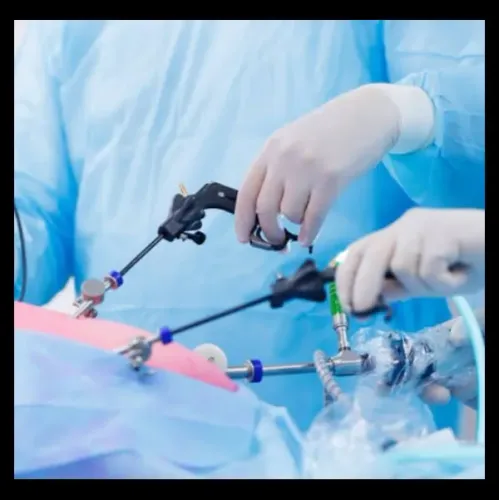
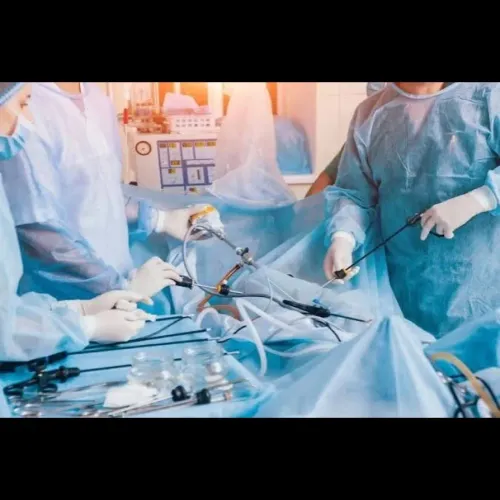
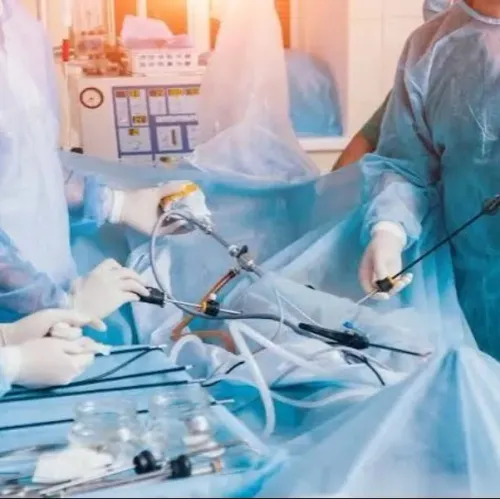
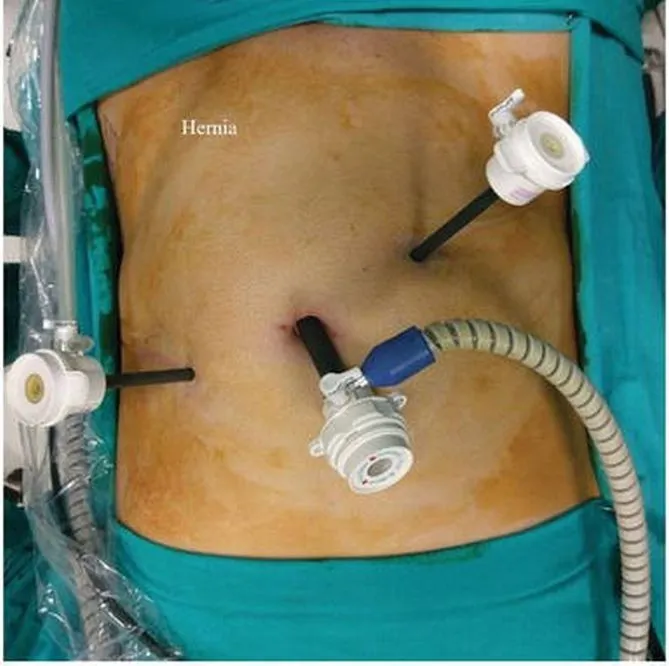
The surgeon uses small access points and a camera to repair the hernia from inside the abdominal cavity or abdominal wall, depending on the technique.
The appropriate approach depends on:
Hernia type
Hernia size
Previous operations
Patient health
Whether the hernia is recurrent
Surgical expertise
Can Laparoscopic Hernia Surgery Be Appropriate for Everyone?
No.
Although minimally invasive surgery is an important option for selected patients, it is not automatically the best approach for every hernia.
A surgeon should evaluate the individual condition before recommending the technique.
What About Recurrent Hernias?
A hernia that returns after previous repair may require a more detailed evaluation.
The surgeon may consider:
Previous surgical approach
Previous mesh repair
Location of recurrence
Size
Scar tissue
Patient factors
The treatment strategy can differ from that used for a first-time hernia.
Incisional Hernia After Previous Surgery
A previous abdominal operation can create a weaker area in the abdominal wall.
A bulge developing at or near a previous surgical scar may be an incisional hernia.
Patients should have such swelling evaluated rather than assuming it is simply part of the old scar.
What Are Warning Signs of a Complicated Hernia?
Seek prompt medical assessment if a hernia becomes:
Suddenly painful
Firm or very tender
Difficult or impossible to push back
Associated with vomiting
Associated with abdominal distension
Associated with inability to pass stool or gas
Rapidly increasing in size
These symptoms can indicate a complication requiring urgent evaluation.
What Is Hernia Strangulation?
In some cases, the blood supply to the tissue trapped in a hernia can become compromised.
This is a serious complication.
Severe pain, a firm tender swelling, vomiting, and rapidly worsening symptoms require urgent medical attention.
Why Should a Painful Hernia Not Be Ignored?
Patients sometimes continue their normal routine despite increasing discomfort.
However, persistent or worsening symptoms deserve medical evaluation.
Early consultation allows the surgeon to assess the condition before an emergency develops.
Can Weight Affect Hernia Treatment?
Body weight can influence abdominal pressure and may also affect surgical planning.
Patients who are overweight may benefit from discussing weight management with their healthcare provider.
However, patients should not delay necessary medical evaluation simply because they are trying to lose weight.
What About Coughing and Constipation?
Repeated coughing and straining can increase abdominal pressure.
If you have a hernia along with chronic cough or constipation, tell your doctor.
Managing contributing factors can form part of the overall treatment plan.
Can Women Develop Groin Hernias?
Yes.
Although inguinal hernias are particularly common in men, women can also develop groin hernias.
Women with unexplained groin swelling or pain should be properly evaluated because other conditions can produce similar symptoms.
Hernia in Older Adults
As tissues weaken with age, hernias may become more common.
Older patients may also have other medical conditions that need to be considered before surgery.
A thorough surgical and medical assessment helps determine the safest treatment approach.
Hernia in Younger Adults
Hernias can also occur in younger people.
They may become noticeable during:
Sports
Weight training
Heavy physical work
Coughing
Straining
Young age does not automatically rule out a hernia.
What Happens During a Hernia Consultation?
The surgeon may ask about:
When the swelling first appeared
Whether it changes size
Pain
Coughing
Constipation
Previous surgery
Physical activity
Previous hernia repair
A physical examination is usually important.
Additional imaging may be recommended when the diagnosis is uncertain or further assessment is needed.
What Should You Bring to Your Appointment?
Bring:
Previous medical records
Previous operation reports
Imaging reports
Current medicine list
Relevant investigation results
Tell the surgeon about previous abdominal surgeries.
Recovery After Hernia Surgery
Recovery varies according to:
Type of hernia
Surgical technique
Size of repair
Individual health
Nature of work
Patients may receive guidance regarding:
Walking
Bathing
Wound care
Driving
Exercise
Heavy lifting
Return to work
Follow your surgeon's instructions rather than using another patient's recovery timeline.
Can You Return to Normal Life After Hernia Repair?
Many patients return to their usual activities after appropriate recovery.
The timing depends on the individual operation and healing.
A successful recovery is not simply about the incision looking good; deeper tissues also require time to heal.
Dr. Ankur Bhanushali – General Surgeon in Thane
Dr. Ankur Bhanushali, General Surgeon, provides evaluation and surgical treatment at Aayush Multispecialty Hospital, Thane.
Patients can consult for appropriate abdominal-wall and groin conditions and discuss:
Diagnosis
Observation
Surgical necessity
Open repair
Laparoscopic approaches
Recovery
Activity restrictions
Follow-up
Treatment recommendations are individualised according to the patient's condition.
Aayush Multispecialty Hospital – Advanced Laparoscopy in Thane
Aayush Multispecialty Hospital provides surgical consultation and treatment supported by modern facilities.
Its Laser & Advanced Laparoscopy Centre positioning reflects its focus on minimally invasive and modern surgical techniques when clinically appropriate.
For selected patients requiring hernia repair, laparoscopic surgery may be considered after proper evaluation.
Looking for Hernia Treatment in Thane?
Patients searching for:
Hernia surgeon in Thane
Hernia treatment in Thane
Laparoscopic hernia surgery in Thane
Hernia operation in Thane
Inguinal hernia surgeon in Thane
Umbilical hernia treatment in Thane
Incisional hernia surgeon in Thane
Laparoscopic surgeon in Thane
General surgeon in Thane West
Advanced laparoscopy centre in Thane
should undergo a proper surgical consultation before deciding on treatment.
Frequently Asked Questions
Can a hernia disappear without surgery?
A hernia generally does not permanently close on its own. Depending on the condition, some hernias may be monitored, while others may require surgical repair.
Can I exercise with a hernia?
Activity recommendations depend on the type and severity of the hernia. Discuss exercise with your surgeon.
Is laparoscopic hernia repair better than open surgery?
Neither approach is automatically better for every patient. The appropriate technique depends on the hernia and individual circumstances.
Can women get hernias?
Yes. Hernias can occur in both men and women.
Is a painless hernia dangerous?
A painless hernia may not be an emergency, but it should still be assessed to determine the appropriate management.
When is a hernia an emergency?
Sudden severe pain, a firm irreducible swelling, vomiting, abdominal distension, or other rapidly worsening symptoms require urgent medical evaluation.
Visit Aayush Multispecialty Hospital, Thane
Laser & Advanced Laparoscopy Centre
Aayush Multispecialty Hospital
Address:
1st Floor, Marigold Apartment
Almeda Road, Mahapalika Bhavan Road
Opposite Nitin Co. & Honda Showroom
Panch Pakhdi, Thane West
Thane, Maharashtra – 400602
Phone: 086910 33033
Open 24 Hours
Conclusion
A hernia may initially appear as nothing more than a small bulge, but it can gradually become painful or develop complications.
Patients should not diagnose themselves based only on the appearance of a swelling. A surgical evaluation can determine whether the problem is a hernia and whether observation or repair may be appropriate.
For suitable patients who require surgery, laparoscopic hernia repair can be considered as a minimally invasive option.
At Aayush Multispecialty Hospital, Thane, Dr. Ankur Bhanushali, General Surgeon, provides evaluation and treatment for appropriate hernia conditions, with modern laparoscopic approaches available when clinically suitable.
For patients searching for a hernia surgeon in Thane, laparoscopic hernia surgery in Thane, general surgeon in Thane, or Advanced Laparoscopy Centre in Thane, Aayush Multispecialty Hospital provides comprehensive surgical consultation and care.
Aayush Multispecialty Hospital
1st Floor, Marigold Apartment, Almeda Road, Mahapalika Bhavan Road, opposite Nitin Co. & Honda Showroom, Panch Pakhdi, Thane West, Thane, Maharashtra – 400602.
Phone: 086910 33033
Keywords